Stone Care Guides · July 16, 2026
How to Clean Exterior Natural Stone Surfaces Safely
A practical guide to cleaning limestone, travertine, marble, slate, sandstone, granite, coral stone, and other outdoor stone without using a one-method-fits-all approach.
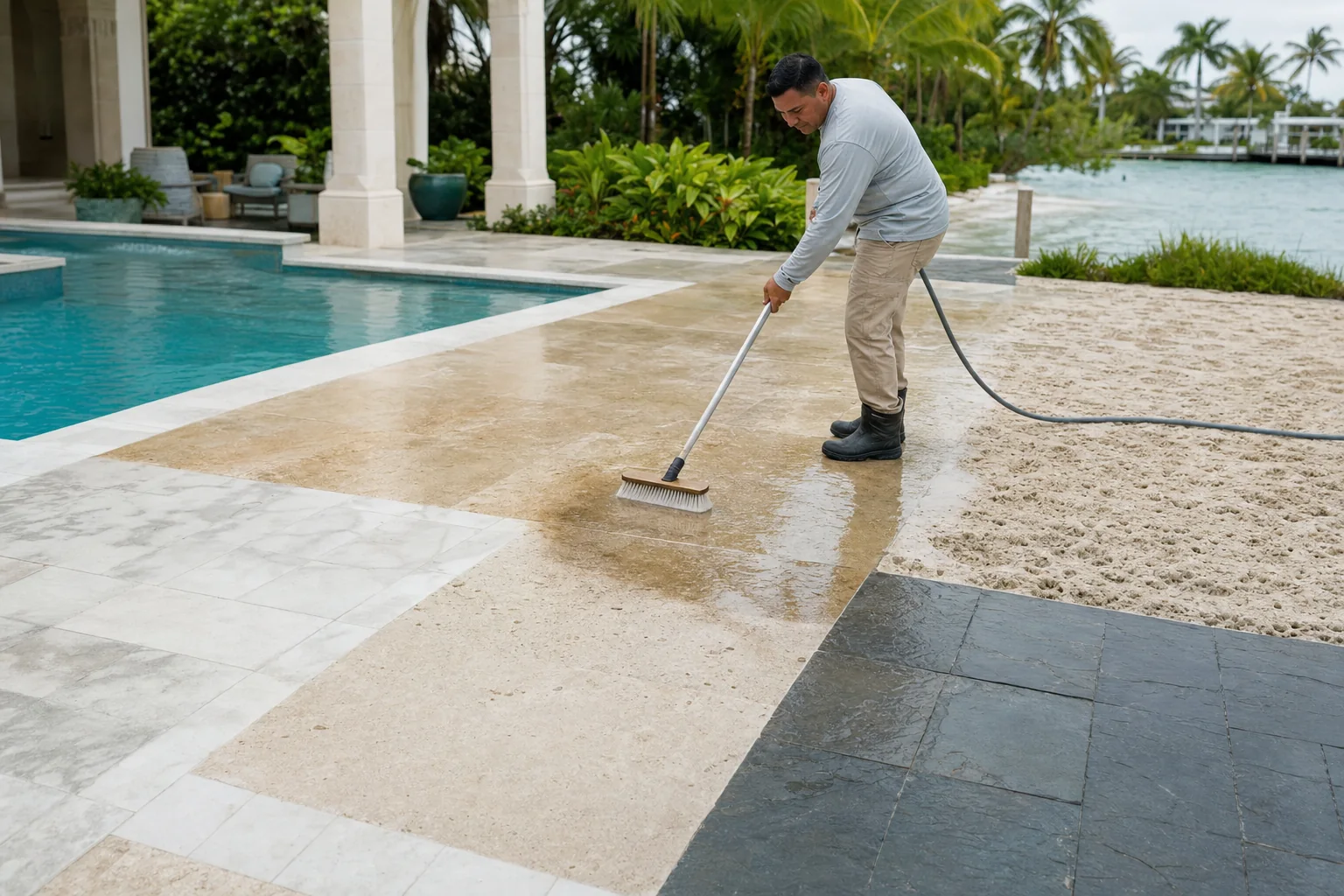
Exterior natural stone adds character to pool decks, patios, walkways, entryways, walls, and outdoor living areas. It also presents a cleaning challenge: natural stone is not one material. Limestone, travertine, marble, slate, sandstone, granite, and coral stone differ in mineral composition, porosity, texture, and resistance to chemicals and abrasion.
That means the safest answer to how to clean exterior natural stone surfaces begins with identification. A product or pressure setting that works on dense granite may permanently etch limestone, loosen a flaky slate surface, or erode porous sandstone. The goal is to remove contamination while preserving the stone, its finish, its joints, and any compatible sealer already doing its job.
First, identify the stone and its finish
Before choosing a cleaner, brush, or machine, determine what material you have. Color alone is not enough. Different stones can look similar, and manufactured pavers can imitate natural stone. The surface finish also matters: honed, polished, tumbled, brushed, sandblasted, and naturally cleft finishes react differently to cleaning.
Look at the surface closely and note:
- Porosity: Does water darken the stone quickly or remain on the surface?
- Texture: Is it smooth, open-pored, gritty, layered, or naturally split?
- Condition: Are there loose grains, flakes, cracks, open holes, weak joints, or previous pressure marks?
- Existing treatment: Does the stone appear sealed, color-enhanced, coated, or unevenly glossy?
- Type of buildup: Is it loose dirt, algae, leaf staining, grease, rust, mineral deposit, paint, or failed sealer?
If the stone cannot be identified with confidence, start with the least aggressive method and test a small, inconspicuous area. Acid-sensitive stone should always be assumed until proven otherwise.
What you need for routine exterior stone cleaning
For ordinary soil and light organic buildup, a conservative toolkit is usually more useful than a harsh chemical:
- A soft outdoor broom or vacuum suitable for dry debris
- Clean water and a controlled rinse source
- A pH-neutral cleaner labeled for natural stone and exterior use
- Soft or medium nylon brushes; avoid metal brushes
- Clean buckets and measuring tools for accurate dilution
- A wet vacuum or extraction method when practical
- Gloves, eye protection, and slip-resistant footwear
Follow the cleaner manufacturer's instructions for dilution, dwell time, rinsing, personal protection, landscaping precautions, and disposal. More product is not necessarily more effective; excess cleaner can leave residue in porous stone and attract new soil.
A safe step-by-step cleaning process
- Inspect drainage and weather conditions. Avoid starting when the stone is saturated from rain or when intense sun will dry the cleaner before it can be rinsed. Protect nearby plants and control runoff.
- Remove loose debris while dry. Sweep away leaves, sand, and grit. Wet grit can become abrasive under a brush or machine.
- Test a small area. Confirm that the cleaner, dilution, brush, rinse method, and drying result do not change the color, texture, sheen, or joints.
- Pre-wet when appropriate. Lightly dampening many porous stones helps reduce uneven chemical absorption. Do not flood the assembly or ignore moisture-sensitive conditions.
- Apply a stone-safe cleaner. Work in manageable sections and keep the solution from drying on the surface.
- Agitate gently. Use a nylon brush and let chemistry and dwell time do more of the work. Aggressive scrubbing can alter softer finishes.
- Rinse or extract completely. Remove dissolved soil and cleaning residue rather than moving dirty water into low areas, joints, or nearby stone.
- Allow the stone to dry. Evaluate the final color only after adequate drying. Persistent dark areas may indicate trapped moisture rather than remaining surface dirt.
Cleaning cautions by natural stone type
Limestone, travertine, marble, and coral stone
These calcium-based stones are vulnerable to acidic cleaners. Vinegar, acidic patio cleaners, and many rust or mineral removers can etch the surface, creating dull spots or a rough texture that cleaning cannot reverse. Travertine may also contain filled holes that require care, while coral stone's open pores can hold moisture and residue. Use a compatible neutral or alkaline stone cleaner selected for the actual contaminant, followed by thorough rinsing.
Slate
Slate quality and durability vary. Some slate is dense and stable; other material can flake, cleave, or release mineral-rich runoff. Test brushes and water pressure carefully, especially at edges and layered areas. Avoid assuming that every dark stain is biological growth—some color variation is part of the stone itself.
Sandstone
Sandstone is often highly absorbent and can shed grains when weathered or over-cleaned. Keep pressure conservative, avoid prolonged saturation, and inspect the surface for loose material before scrubbing. Strong chemicals can travel into the pores and become difficult to rinse completely.
Granite and other dense stones
Granite is generally denser and more chemical-resistant than limestone, but it is not indestructible. Joints, resin-filled areas, textured finishes, surrounding materials, and certain mineral components may still be vulnerable. A dense stone also can become slippery if soap or biological residue remains, so complete rinsing matters.
Can exterior natural stone be pressure washed?
Pressure washing is not automatically safe simply because the stone is outdoors. Excess pressure, a narrow tip, or holding the nozzle too close can create lines, open pores, erode soft stone, dislodge joint material, expose aggregate, and force water behind walls or beneath paving.
If pressure-assisted cleaning is appropriate, it should be calibrated to the stone and its condition. Start with the lowest effective pressure, maintain a consistent distance and angle, use a broader spray pattern, and verify the result in a test area. Fragile, flaking, cracked, or heavily weathered stone may require low-pressure rinsing, controlled agitation, or professional equipment instead.
What about algae, mildew, and black organic buildup?
Miami's humidity, warm temperatures, shaded landscaping, pool splash, and irrigation overspray encourage biological growth. Cleaning the visible film is only part of the solution. If the area remains wet, growth can return quickly.
Use a natural-stone-compatible treatment for biological contamination and follow its label. Do not mix cleaning chemicals. In particular, never combine bleach-containing products with acids or ammonia. After cleaning, address the contributing condition by adjusting irrigation, improving drainage, trimming dense landscaping where appropriate, or increasing routine debris removal.
Stains that need a different approach
General cleaning will not solve every discoloration. Treating the wrong stain with the wrong chemistry can make it harder to remove or permanently alter the stone.
- Rust and orange staining: May come from metal furniture, irrigation water, fertilizer, or minerals within the stone. Many rust removers are acidic and unsafe for calcareous stone.
- White deposits: Could be hard-water residue, salt, efflorescence, or cleaner residue. The source should be identified before treatment.
- Oil and grease: Usually require a compatible degreasing or poultice process rather than stronger pressure.
- Leaf and organic stains: Often improve with targeted biological stain treatment after loose material is removed.
- Paint, coatings, or failed sealer: May require controlled stripping and professional containment.
Miami conditions change the maintenance plan
Exterior stone in South Florida experiences frequent rain, high humidity, intense UV, salt exposure in coastal areas, irrigation, pool chemicals, and year-round organic growth. Sunny and shaded sections of the same patio can behave differently. One may dry rapidly while another remains dark and damp for hours.
Good maintenance includes regular dry sweeping, prompt removal of leaves and spills, periodic inspection of drainage and irrigation, and gentle cleaning before buildup becomes deeply embedded. Avoid allowing dirty wash water to dry on the stone, and watch for recurring problem areas that may signal moisture movement or a failing drainage detail.
Should exterior natural stone be sealed after cleaning?
Sealing can help some exterior stone resist water and staining, but it should not be treated as an automatic final step. The stone must be clean and sufficiently dry, and the product must be compatible with the stone, finish, substrate, moisture conditions, and desired appearance.
Applying sealer over trapped moisture, residue, biological growth, or an incompatible previous treatment can cause darkening, haze, patchiness, poor bonding, or peeling. Before resealing, evaluate whether the existing sealer is still performing and whether the underlying moisture conditions are suitable.
When professional cleaning or restoration is safer
Consider professional evaluation when the stone type is unknown, the surface is flaking or powdering, stains are deep or widespread, previous coatings are failing, joints are loose, or the area has uneven darkening that may indicate moisture below the surface. Restoration may also be needed when prior pressure washing or acidic cleaning has already changed the texture or finish.
A professional process should still begin with identification, inspection, and a test area. The advantage is not simply stronger equipment; it is the ability to match chemistry, agitation, extraction, pressure, and drying to the material and the problem.
Frequently asked questions
Can you pressure wash exterior natural stone?
Some sound, properly installed stone may tolerate carefully calibrated pressure. High pressure, narrow tips, and close nozzle distances can damage softer stone and joints, so test first and use the lowest effective setting.
Can vinegar be used on natural stone?
No—not on acid-sensitive limestone, travertine, marble, or coral stone. Vinegar can etch and dull these materials. Use a cleaner specifically labeled as safe for the identified stone.
How often should exterior natural stone be cleaned?
Sweep and remove organic debris routinely. Deeper cleaning depends on shade, traffic, drainage, irrigation, pool splash, salt exposure, and stone type. Clean before buildup becomes deeply embedded rather than following one fixed schedule.
Should natural stone be sealed after cleaning?
Only after the surface is clean and thoroughly dry and the existing treatment has been evaluated. The sealer must be compatible with the stone, finish, location, and moisture conditions.
Related exterior stone care services
Get advice for your specific stone
Send photos and a short description of the surface, stain, and location. Coral Stone Care serves Miami, Coconut Grove, South Miami, Pinecrest, and Kendall.
Request a Free Quote