Stone Care Guides · 2026-07-16
Coral Stone Pool Deck Maintenance in Miami: A Practical Care Guide
Learn how to care for a coral stone pool deck in Miami’s humid, sunny, wet conditions, with practical guidance on cleaning, drainage, traction, joints, splash, and routine maintenance.
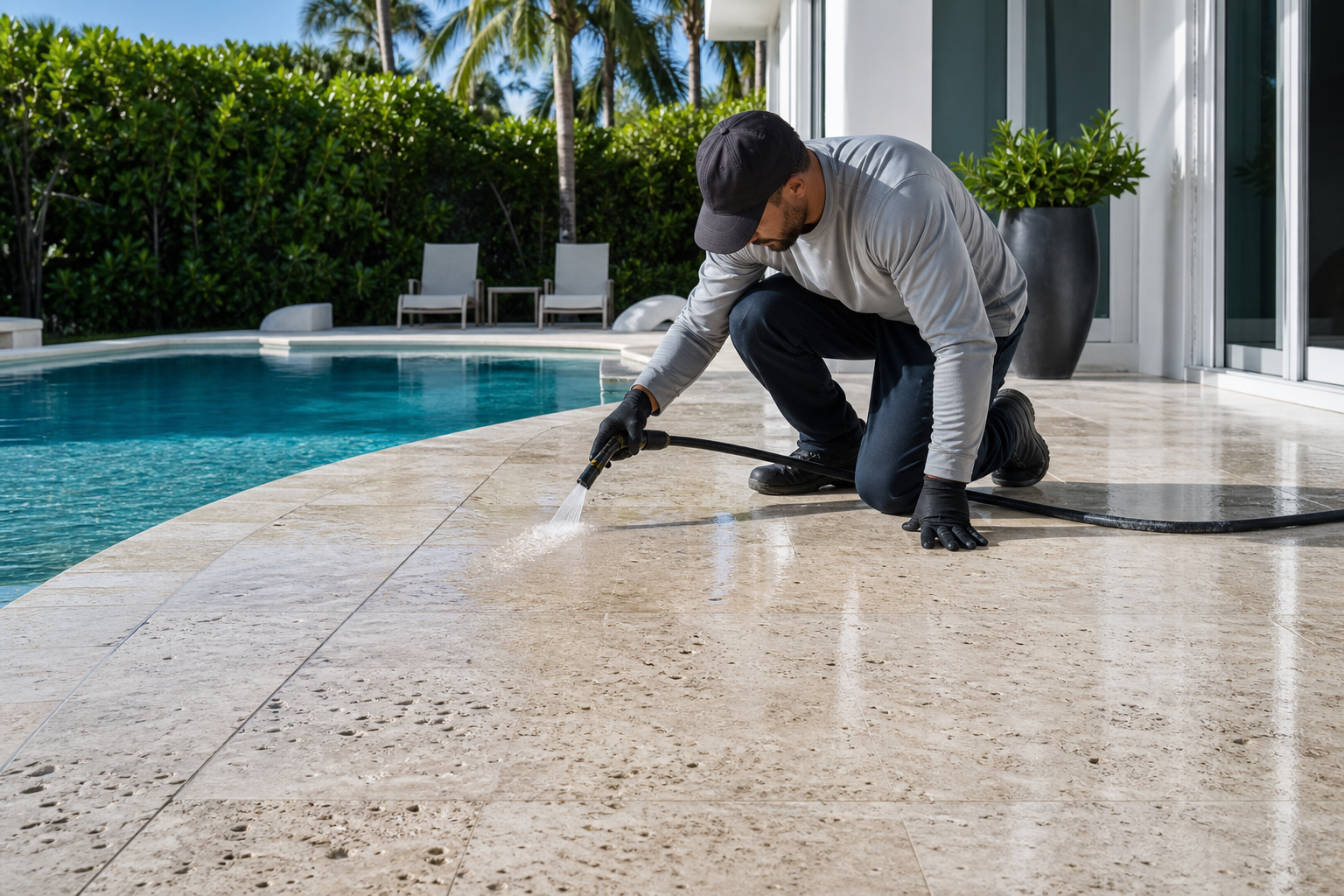
Coral stone is a popular pool deck surface in South Florida because it stays relatively comfortable underfoot and fits the look of tropical outdoor spaces. But a pool deck lives in a demanding environment. In Miami, coral stone is exposed to humidity, frequent rain, strong UV, pool splash, shade, irrigation overspray, and repeated wet-dry cycling. That combination can change how the stone looks, feels, and wears over time.
If you are researching coral stone pool deck maintenance Miami, it helps to focus less on quick fixes and more on the conditions that affect the stone every week. Routine care is not only about appearance. It also supports surface traction, helps protect joints, and reduces the buildup of residues that can make a deck look uneven or feel slick.
Why coral stone pool decks need a different maintenance approach
Coral stone is naturally porous. Around a pool, that matters. Water does not just land on the surface once and dry evenly. It arrives from rainfall, splashing, damp furniture, bare feet, hose rinsing, and sprinkler overspray. Then the deck dries in uneven patterns depending on sun, shade, airflow, and drainage.
This repeated wet-dry cycling is one of the main reasons pool decks need regular attention. Areas that stay damp longer can collect organic staining, surface grime, and mineral residue more quickly than areas with full sun and better airflow. Sections near planters, screen enclosures, water features, and low spots often show changes first.
Coral stone also reacts to how the pool area is used. Sunscreen oils, body oils, spilled drinks, leaf tannins, and airborne dirt can settle into the surface texture. In Miami, UV exposure can further dry and age the surface while summer rain repeatedly re-wets it. The result is often a deck that looks patchy before it looks badly damaged.
Common maintenance issues on Miami pool decks
Pool splash, chlorinated water, and salt systems
Even when pool water is balanced, repeated splash-out leaves residue behind. On some decks, this appears as dulling, light deposits, or a general loss of a clean, even finish. Saltwater pools can leave additional surface residue as water evaporates. Chlorinated water can also contribute to buildup when it dries repeatedly on the stone.
The goal of maintenance is not to treat every spot as a major restoration issue. It is to remove residues before they become more established and before they combine with dirt, sunscreen oils, and moisture in the pores of the stone.
Sunscreen oils and everyday use
Pool decks collect more oily residue than many homeowners expect. Sunscreen, tanning products, lotions, and body oils often settle in the traffic path between the pool edge, seating area, and back door. These residues can attract dirt and darken the stone in irregular patterns. They can also affect how the surface feels under bare feet, especially when mixed with moisture.
UV exposure and uneven fading
Direct sun and partial shade age a deck differently. One section may stay bright and dry quickly, while another remains shaded and damp well into the day. This does not always mean the shaded area is failing, but it often means it needs more frequent cleaning. UV exposure can also highlight old sealer inconsistencies or uneven wear from traffic lanes.
Drainage problems and standing water
Drainage is one of the most important factors in exterior stone care. If water sits on the deck after a storm or gathers in a repeated splash zone, the stone remains wet longer than intended. That encourages surface film, darkened patches, and residue buildup. In Miami’s rainy periods, even a small low spot can stay damp enough to become a recurring maintenance issue.
Irrigation overspray
Sprinklers that hit the pool deck add unnecessary moisture and can leave mineral deposits over time. Overspray near planters or lawn edges also carries soil onto the stone, which can lead to staining and a consistently dirty appearance along the perimeter. If one section of the deck always looks darker or greener than the rest, irrigation is often part of the reason.
What practical maintenance should focus on
Good maintenance for exterior coral stone is usually a combination of cleaning, inspection, and periodic correction. The right plan depends on the age of the stone, the condition of the joints, the amount of shade, and how much splash and foot traffic the area gets.
1. Clean buildup without making the surface harsher
Pool decks need cleaning methods that remove grime, oils, and environmental residue without leaving the surface etched, overly rough, or uneven in color. Aggressive methods can create a deck that looks cleaner at first but feels less comfortable underfoot and may collect dirt faster afterward.
For coral stone, maintenance should respect the natural texture rather than trying to strip the surface into a uniform, newly cut look. The goal is a clean, usable deck that still feels like stone, not a surface that has been overworked.
2. Preserve surface traction
Traction matters around pools. A deck can become slippery not only from standing water but also from oily film, organic growth, and residue trapped in the pores. Cleaning should improve the deck’s natural grip, not leave behind a glossy or smeared surface. If an area feels slick, the cause may be buildup rather than the stone itself.
Maintenance decisions should keep surface traction in mind, especially on steps, tight corners, and entry or exit points where people are likely to turn with wet feet.
3. Inspect joints and edges
Joints are easy to overlook until movement, erosion, or plant debris begins to collect in them. Open or deteriorated joints can let more water into the system, contribute to uneven drying, and make routine cleaning less effective. They can also collect dirt that spreads onto the surrounding stone during rain.
Regular inspection of joints, coping transitions, and deck edges helps catch small issues before they lead to broader surface problems. This is especially useful after heavy rain cycles or if the deck includes multiple sections with different slopes.
4. Support drying with better water management
A maintenance plan should account for where the water goes after it hits the deck. That includes rainfall, splash-out, backwash areas, hose rinsing, and irrigation. If a section repeatedly stays wet, cleaning alone may not solve the issue for long. Water management and drainage often need attention at the same time.
- Check for low spots where rain or splash tends to collect.
- Notice whether shaded corners stay wet much longer than open areas.
- Watch for sprinkler heads that hit the stone directly.
- Keep drains and runoff paths clear of leaves and debris.
- Pay attention to planters that overflow onto the deck during rain.
How Miami conditions shape maintenance timing
Miami weather affects not just how a coral stone deck ages, but also when maintenance becomes more important. During humid and rainy stretches, decks can remain damp longer, especially in shaded areas with limited airflow. During brighter, hotter periods, UV exposure and rapid drying can make residue lines and splash patterns stand out more clearly.
Homes near the water may also deal with more salt air, which can add to exterior surface residue over time. That does not mean the same care routine fits every property. A fully exposed deck with good drainage behaves differently from a heavily landscaped yard with shade, overspray, and daily pool use.
In practice, the best timing often follows the deck’s actual conditions rather than the calendar alone. A deck may need attention sooner if you notice darkened traffic lanes, a dull film near the pool edge, recurring slickness, or joints that stay packed with debris after rain.
Signs your coral stone pool deck may need service
- The stone looks blotchy even after basic rinsing.
- Walking paths show darkened areas from sunscreen oils or foot traffic.
- The deck feels slick in certain spots, especially when wet.
- White or dull residue appears near splash zones.
- Shaded sections stay dark longer than surrounding areas.
- Joints are opening, collecting debris, or washing out.
- Perimeter areas near landscaping show staining from irrigation overspray or soil.
A sensible long-term approach
Coral stone pool deck maintenance works best as ongoing care, not as a one-time reaction after the surface looks tired. Cleaning, restoring, sealing when appropriate, and monitoring the deck’s water exposure all play a role. The point is to keep the stone usable, attractive, and easier to maintain in a setting where moisture and sun are always competing.
For many Miami properties, the biggest improvements come from addressing the basics consistently: remove oily and mineral buildup, protect traction, watch the joints, reduce irrigation overspray, and correct drainage patterns that keep parts of the deck wet too long. Those steps are practical, people-first, and directly tied to how coral stone performs around a pool.
FAQs
How often should a coral stone pool deck be professionally maintained?
It depends on shade, drainage, pool use, splash-out, and irrigation exposure. A deck with heavy use and recurring moisture usually needs attention more often than one with full sun and better drying conditions.
Can pool water really affect coral stone?
Yes. Repeated splash from chlorinated or salt pool water can leave residue as it dries. Over time, that buildup can affect appearance and contribute to uneven surface conditions.
Why does one part of my pool deck stay darker than the rest?
Usually because it stays wet longer. Shade, low spots, irrigation overspray, planter runoff, or poor drainage can all slow drying and lead to darker patches or more visible buildup.
Does maintenance help with slip concerns?
It can help by removing oily film, grime, and residue that reduce natural traction. Around a pool, surface cleanliness and water management are both important to keeping the deck safer underfoot.
Related stone care services
Get a condition-based recommendation
Send photos and a short description of the surface. We serve Miami and surrounding communities.
Request a Free Quote