
Stone Care Guides · 2026-07-21
How Miami Humidity Affects Limestone Patios
A practical guide to how Miami weather and site conditions influence limestone patios, with preventive care tips focused on existing stone.
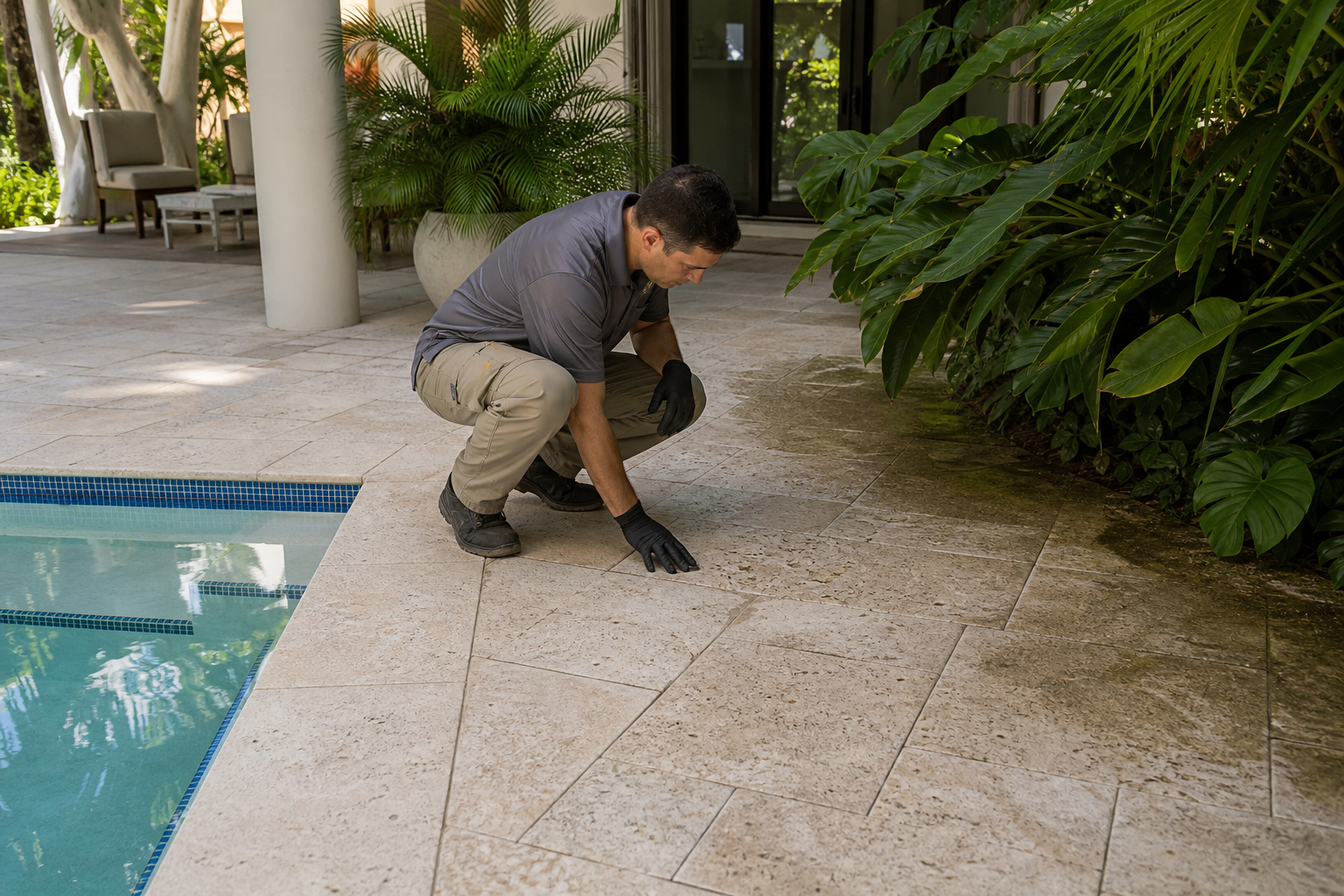
Limestone patios look calm and timeless, but in Miami they live in a demanding environment. If you are wondering how Miami humidity affects limestone patios, the short answer is that moisture in the air often works together with rain, shade, salt air, irrigation, pool splash, and heat to keep stone surfaces damp longer than expected. That lingering moisture can change how a patio looks, how clean it stays, and how often it needs attention.
For homeowners, the most useful approach is not to think about one weather factor in isolation. Miami conditions overlap. A patio may get morning shade, afternoon sun, frequent rain, and regular irrigation overspray in the same week. Add nearby planting beds or a pool edge, and limestone can start showing darkened areas, surface buildup, slippery spots, or uneven weathering. Preventive care is about recognizing those patterns early and adjusting cleaning, drainage, and maintenance around them.
Why humidity matters so much for limestone
Limestone is a natural stone with a softer, more absorbent character than some denser materials. In a humid climate, that matters because the stone can stay damp for longer periods after rain, washing, irrigation, or even overnight condensation. The issue is not simply that the patio gets wet. The bigger concern is that it may not dry out quickly.
When a limestone patio stays damp, several practical problems become more likely:
- Surface darkening that makes some sections look patchy or older than others.
- Organic growth such as algae or mildew in shaded or slow-drying areas.
- Embedded dirt because moisture can help fine soil cling to the stone.
- Slippery spots where moisture and buildup combine.
- Uneven wear between sunny areas and protected corners.
Humidity alone does not ruin a patio, but it changes the pace at which moisture-related issues appear. In Miami, that means limestone often benefits from more attentive observation, especially after long rainy stretches or during times when shaded areas rarely dry fully.
Rainfall and drainage often tell the real story
Rain is a regular part of Miami life, and repeated wetting can be hard on a limestone patio when drainage is poor. If water lingers on the surface, settles near joints, or runs from planting beds onto the patio, the stone is exposed to longer moisture contact than it was designed to handle comfortably.
Good preventive care starts with watching how water moves across the space. During or after a storm, look for places where:
- Water ponds in shallow depressions.
- Runoff from roofs or hardscape edges crosses the patio.
- Downspouts or drains release water near the stone.
- Mulch, soil, or organic debris washes onto the surface.
- Patio edges stay dark long after the open areas have dried.
Drainage problems do more than keep stone wet. They also move dirt, leaf stain, and organic matter onto the surface, which can make cleaning more frequent and more complicated. On a limestone patio, simple drainage corrections and routine inspection often do more for long-term appearance than aggressive cleaning after heavy buildup has already formed.
UV exposure can dry stone, but it also creates contrast
Miami sun can help open sections of a limestone patio dry faster after rain or humidity. That sounds helpful, and often it is. But strong UV exposure also creates a contrast between sunlit and shaded zones. The sunny side may bleach lighter, dry faster, and collect less organic growth, while covered or tree-shaded sections stay darker and hold more moisture.
This is why many limestone patios in Miami do not age evenly. A homeowner may assume the stone itself is failing when the real issue is that one area gets intense sun and another stays damp beneath foliage, overhangs, or nearby walls. Preventive care should focus on balancing those conditions where possible, not just treating the visible staining.
It also helps to keep in mind that heat and sunlight can make old residues or improper past treatments more noticeable. When one section dries rapidly and another remains humid, differences in appearance become easier to see.
Shade, trees, and landscaping can trap moisture
Lush landscaping is part of the Miami look, but it can change the microclimate around a limestone patio. Dense plantings, palms, hedges, and ground cover may reduce airflow and block sun, slowing evaporation after rain or irrigation. Fallen leaves and plant debris can also hold moisture against the stone and leave stains if not removed.
Common landscaping-related issues include:
- Leaf litter sitting in corners or between pavers.
- Mulch migration onto the stone during storms.
- Sprinkler overspray that repeatedly wets the same areas.
- Root-related settling that changes slope and drainage over time.
- Low airflow in enclosed courtyards or heavily planted patio edges.
Preventive care does not mean removing the landscape. It means managing how the landscape interacts with the stone. Trimming back plants for airflow, keeping debris from collecting, and making sure irrigation is aimed away from the patio can reduce many humidity-related issues before they become visible staining or slick growth.
Salt air and pool splash add another layer
In Miami, some homes deal with salt air from coastal exposure, while others see repeated pool splash on limestone decks and patios. These moisture sources are different, but both can contribute to residue, surface dullness, and ongoing dampness in certain zones.
Salt air tends to settle lightly over exterior surfaces, especially where breezes regularly hit the patio. Pool splash usually affects edges, lounge areas, and walking paths near the waterline. In both cases, the stone may benefit from more careful observation because these areas can collect film or show color variation faster than protected parts of the patio.
When salt exposure or pool water is part of the setting, preventive care should include attention to where moisture repeatedly lands and whether those spots are drying normally. Uneven drying often points to a maintenance need even before obvious buildup appears.
How maintenance frequency changes in Miami
There is no single schedule that fits every limestone patio. In Miami, maintenance frequency is best guided by inspection rather than a fixed interval because site conditions vary so much. A fully exposed patio with good drainage may stay cleaner longer than a shaded patio near dense landscaping or a pool, even if both are made from the same stone.
A practical inspection routine should look for:
- Persistent dark areas that suggest moisture is lingering.
- Green or black film in shaded or damp zones.
- Surface haze or residue near pool edges or areas exposed to salt air.
- Soil washout or splash marks along planting beds.
- Changes in slope or puddling after rainfall.
- Seal wear or uneven absorption if the stone has been sealed before.
When these signs appear, it usually means the patio should be evaluated for cleaning, drainage correction, surface protection review, or broader maintenance planning. The right timing depends on how quickly local conditions are affecting the stone, not on a generic calendar.
Cleaning and sealing should match the environment
Limestone needs a careful approach. In a humid Miami setting, cleaning should remove organic growth, soil, and environmental residue without creating unnecessary surface stress. The goal is to restore a clean, even appearance while respecting the natural character of the stone.
Sealing can also be part of preventive care, but it works best when paired with realistic expectations. A sealer does not stop weather, shade, or drainage problems. It is only one part of a broader strategy. If irrigation keeps spraying the same corner every morning or runoff regularly crosses the patio, those conditions still need to be addressed.
For many properties, the smartest plan combines:
- Routine visual inspection after rainy or humid periods.
- Prompt removal of leaf debris and soil buildup.
- Adjustment of sprinklers to limit repeated wetting.
- Review of drainage where puddling occurs.
- Cleaning and protective treatment based on the patio's actual exposure.
This people-first approach helps homeowners make decisions based on how the patio is performing in place, rather than relying on assumptions about stone care in general.
Signs a limestone patio may need preventive attention
Because Miami weather can speed up visible change, early signs are worth taking seriously. A patio does not need to look severely worn before preventive care becomes useful.
Look more closely if you notice:
- Areas that feel slick after humid mornings.
- Color differences that remain even after the surface dries.
- Recurring buildup along shaded walls or steps.
- Patio sections near planters that never seem fully clean.
- Moisture patterns that outline joints, edges, or low spots.
These clues often point to an environmental cause, such as drainage, irrigation, shade, or repeated splash. Treating the stone without addressing those conditions may only provide short-term improvement.
FAQ
Does Miami humidity damage limestone patios by itself?
Humidity alone is usually not the whole problem. It becomes more important when it keeps limestone damp after rain, irrigation, shade, or pool splash, which can encourage buildup and uneven weathering.
Why does part of my limestone patio stay darker than the rest?
Dark areas often dry more slowly because of shade, poor drainage, nearby landscaping, or repeated moisture from sprinklers or splash. The color difference is often a sign of environmental conditions rather than a single stone defect.
How often should a limestone patio in Miami be maintained?
That depends on exposure. Inspection is the best guide. Patios with more shade, rainfall runoff, irrigation overspray, salt air, or pool splash usually show maintenance needs sooner than well-drained, open areas.
Can sealing solve moisture problems on a limestone patio?
Sealing may help as part of a broader care plan, but it does not fix drainage, shade, or repeated wetting. Lasting preventive care usually involves both surface treatment and correction of the conditions that keep the stone damp.
Related stone care services
Get a condition-based recommendation
Send photos and a short description of the surface. We serve Miami and surrounding communities.
Request a Free Quote