
Stone Care Guides · 2026-07-23
Miami Guide to Pool Deck Drainage and Natural Stone Staining
Learn how pool deck drainage, splash, UV, oils, and irrigation affect natural stone staining on Miami pool decks and exterior stone surfaces.
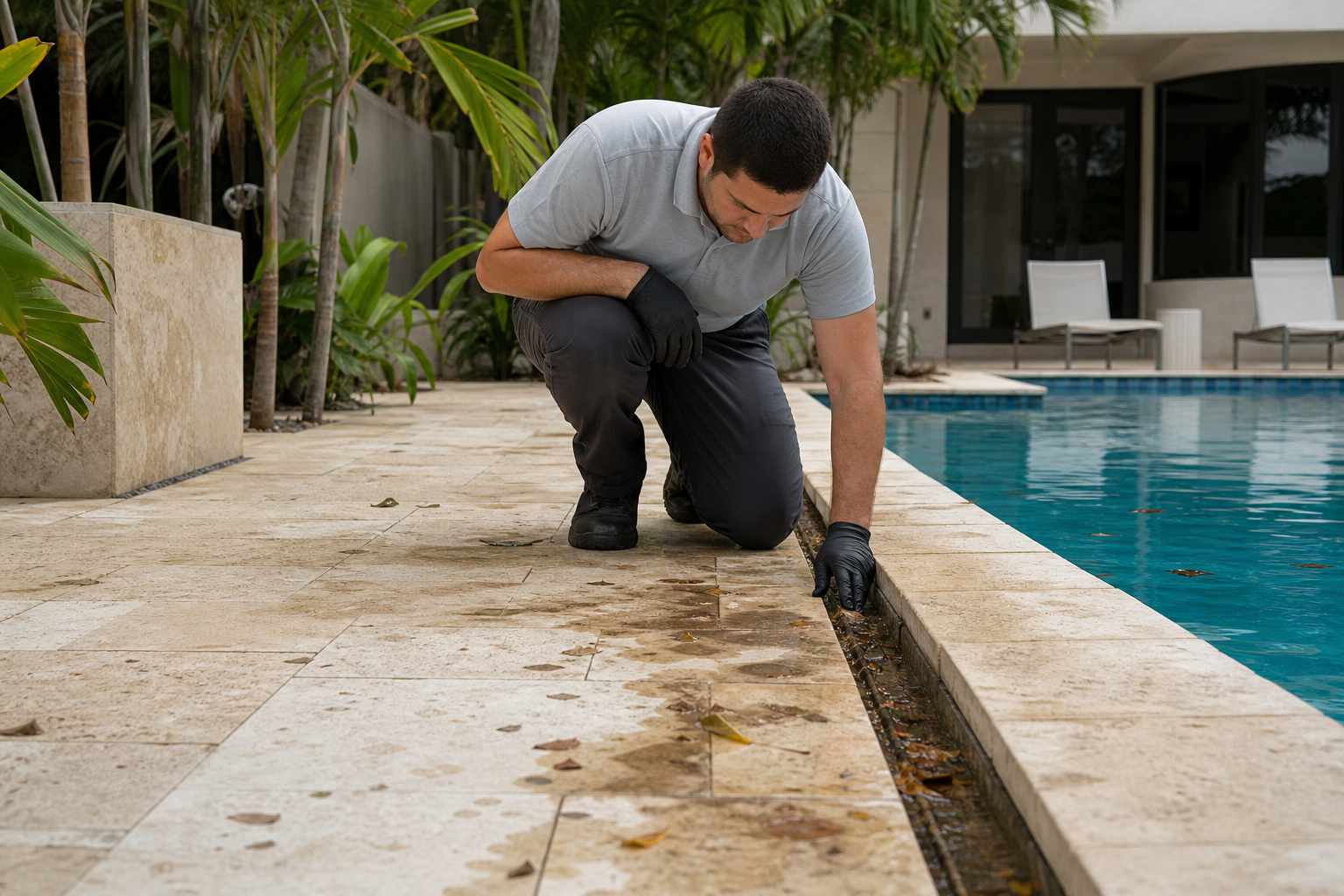
Pool areas put natural stone through a hard routine every day. Water splashes out, the surface dries under strong sun, and then rain or irrigation adds more moisture again. In Miami, that cycle is even more demanding because of humidity, frequent rain, UV exposure, salt air near the coast, and shaded areas that stay damp longer. When homeowners search for answers about pool deck drainage and natural stone staining, they are often seeing the result of several conditions working together rather than one single problem.
A useful way to think about exterior stone care is to look at what lands on the surface, what soaks into it, and how quickly water leaves the area. Pool splash, chlorinated water, saltwater systems, sunscreen oils, plant matter, and irrigation overspray can all leave residues behind. If the deck does not drain well, those residues sit longer, travel into joints, and concentrate in low spots. Over time, discoloration and traction concerns can show up together.
Why drainage matters on natural stone pool decks
Drainage affects both appearance and day-to-day usability. When water does not move off the deck efficiently, it can collect in shallow depressions, around coping, beside drains, or along joints. These wet zones often darken differently from the surrounding stone. Minerals, dirt, and organic debris also settle there first. Even if the stone is cleaned, the same pattern may return if water continues to pause in the same areas.
Good drainage is not only about large puddles. Small, repeated damp areas matter too. Wet-dry cycling is a major part of exterior stone wear. A deck gets wet from pool splash or rain, then bakes in the sun, then gets wet again. That repeated cycle can pull residues into the stone, leave surface marks, and stress grout or joint materials. In shaded corners, the cycle may slow down, which means moisture remains trapped for longer periods and surface growth is more likely to develop.
On a practical level, poor drainage can also affect surface traction. Stone that stays damp can feel different underfoot than the same surface when it is clean and evenly dry. Add sunscreen, body oils, or algae-prone residue in a low area, and the deck may become more slippery than the rest of the patio.
Common causes of natural stone staining around pools
Natural stone staining outside is often a combination of water, residue, and time. Around a pool, the most common contributors include:
- Pool splash and overflow: Water carries dissolved treatment chemicals and leaves residue after evaporation.
- Salt or chlorinated water: Both can affect the surface over time, especially where water lands repeatedly.
- Sunscreen oils and body products: These can transfer from feet, chairs, and towels onto the deck and soak into porous stone.
- Irrigation overspray: Repeated spray adds moisture, minerals, and soil splash, especially at lawn or planter edges.
- Leaf litter and organic debris: Tannins and decaying material can leave discoloration if they stay on damp stone.
- Metal furniture or fixtures: Rust-related marks may appear where moisture collects around metal contact points.
Not every mark is a deep stain. Some are residue deposits on the surface, while others have penetrated the stone or settled in textured areas. A deck may also show uneven color because one side receives stronger UV and dries fast, while another sits in shade and stays damp. In Miami, this sun-to-shade contrast can be strong over a single patio.
How Miami conditions influence pool deck drainage and natural stone staining
Miami weather does not create every problem, but it does intensify many of them. Frequent rain can expose weak drainage patterns that are easy to miss during dry periods. High UV can bake residues onto the surface. Humidity slows drying in shaded areas, especially near walls, landscaping, or covered lanais. Coastal properties may also deal with salt air that settles on exterior surfaces and adds to routine buildup.
Irrigation is another overlooked factor. Sprinklers aimed too high or too close to the deck can keep stone edges wet every morning. Even a clean-looking spray can leave mineral deposits and feed recurring discoloration. When overspray meets pool splash and afternoon rain, the result is an almost constant moisture source at specific borders and joints.
Shade matters as much as sun. Areas under trees, beside hedges, or on the north side of a structure can stay damp longer and collect more organic staining. Meanwhile, exposed sections may show fading, drying, and heat-related residue patterns due to intense UV. Seeing two different types of staining on the same deck is common.
Where to inspect first
If a pool deck looks blotchy or seems to dry unevenly, inspect the layout before focusing only on cleaning. A basic visual check can reveal whether drainage or moisture patterns are helping cause the staining.
- Look for puddling after rain or after the pool is used heavily.
- Notice whether dark spots match low areas, corners, drain edges, or furniture locations.
- Check joints for cracking, washout, gaps, or persistent dampness.
- Look at coping and transitions where different materials meet.
- Watch whether irrigation hits the stone directly.
- Compare sunny zones to shaded zones for drying time and color variation.
- Check for residue lines where water repeatedly evaporates.
These observations help separate a drainage issue from a localized spill, organic stain, or maintenance gap. In many cases, there is more than one cause.
Why joints and edges deserve special attention
Joints are often the first place where moisture lingers and debris settles. If joint material is worn, uneven, or separating, water may collect there instead of moving away as intended. Fine dirt and plant matter then build up in the recesses, and the surrounding stone can darken along those lines. On some decks, staining around joints creates a grid-like pattern that makes the whole surface look older or dirtier than it really is.
Edges matter too. The perimeter where stone meets grass, mulch, planters, or drains often shows the earliest effects of irrigation overspray and runoff. These transition zones are exposed to both hardscape and landscape issues at the same time, so they may need more frequent attention than the middle of the deck.
Cleaning and restoration approach for existing stone
Because natural stone varies in density, finish, and porosity, the safest approach is to identify the type of residue and the moisture source before choosing a treatment plan. Exterior stone care is not just about making a stain lighter. It is about reducing the conditions that keep bringing it back.
A practical restoration process may include careful cleaning of surface buildup, treatment of affected areas, attention to joints, and evaluation of whether sealing is appropriate for the specific stone and use pattern. Sealing is not a substitute for drainage. If water is consistently pooling or irrigation is constantly wetting one edge, discoloration can continue even after the surface is treated.
Surface traction should also stay part of the conversation. Pool decks need to be clean and comfortable to walk on, but they also need to remain suitable for wet barefoot use. Any maintenance plan should respect the existing finish and the way the deck performs when damp.
Maintenance habits that help reduce recurring stains
- Rinse or clean sunscreen and body-oil residue before it sits on warm stone for long periods.
- Remove leaves, mulch, and wet debris promptly, especially from shaded corners.
- Monitor sprinkler direction and timing to reduce unnecessary overspray.
- Pay attention to spots that dry last after rain or pool use.
- Keep drains and drainage paths free of blockages.
- Address joint deterioration before debris and water start collecting more deeply.
- Use care methods suited to natural stone rather than treating it like standard concrete.
These habits do not replace professional cleaning, restoration, sealing, or maintenance when the surface already has buildup or visible staining. They do help slow the return of common poolside issues.
When staining may point to a bigger drainage problem
Some stains are mostly cosmetic, while others are signs that water movement around the deck should be reviewed more closely. If the same areas stay dark, show recurring residue rings, or feel slick despite repeated cleaning, it may mean moisture is not leaving the surface efficiently. Water could be pausing on top, collecting around coping, or repeatedly reaching the area from irrigation or splash-out.
Likewise, if discoloration follows a pattern along joints, planter edges, or down-slope transitions, that often suggests the surface is telling a drainage story. Cleaning the stone can improve appearance, but lasting improvement usually depends on addressing how water, debris, and residue reach that area in the first place.
For Miami pool decks and exterior stone, the goal is not a perfect surface that never gets wet. It is a surface that dries predictably, resists recurring buildup, and remains easier to maintain through rain, heat, shade, and everyday pool use.
FAQs
Why does my pool deck stain more in some areas than others?
Uneven staining usually follows moisture patterns. Low spots, shaded sections, joints, and areas hit by irrigation overspray or frequent pool splash tend to stay wet longer and collect more residue.
Can sealing fix pool deck drainage and natural stone staining by itself?
No. Sealing may be part of a care plan for some stone, but it does not correct pooling water, splash patterns, failing joints, or sprinkler overspray. Drainage and moisture sources still need attention.
Do sunscreen oils really affect natural stone?
Yes. Around pools, sunscreen and body oils can transfer onto porous stone and contribute to dark spots or dingy traffic areas, especially when heat and repeated wet-dry cycling are involved.
Is saltwater worse than chlorinated water for stone decks?
Both can leave residues and contribute to wear over time. The bigger issue is repeated exposure combined with evaporation, poor drainage, and limited cleaning, which allows deposits to build up on and within the stone.
Related stone care services
Get a condition-based recommendation
Send photos and a short description of the surface. We serve Miami and surrounding communities.
Request a Free Quote