Stone Care Guides · 2026-07-17
Best Way to Remove Algae From Natural Stone in Miami
A practical guide to cleaning algae from coral and other natural stone in Miami, with safe methods that respect porosity, moisture, and surface condition.
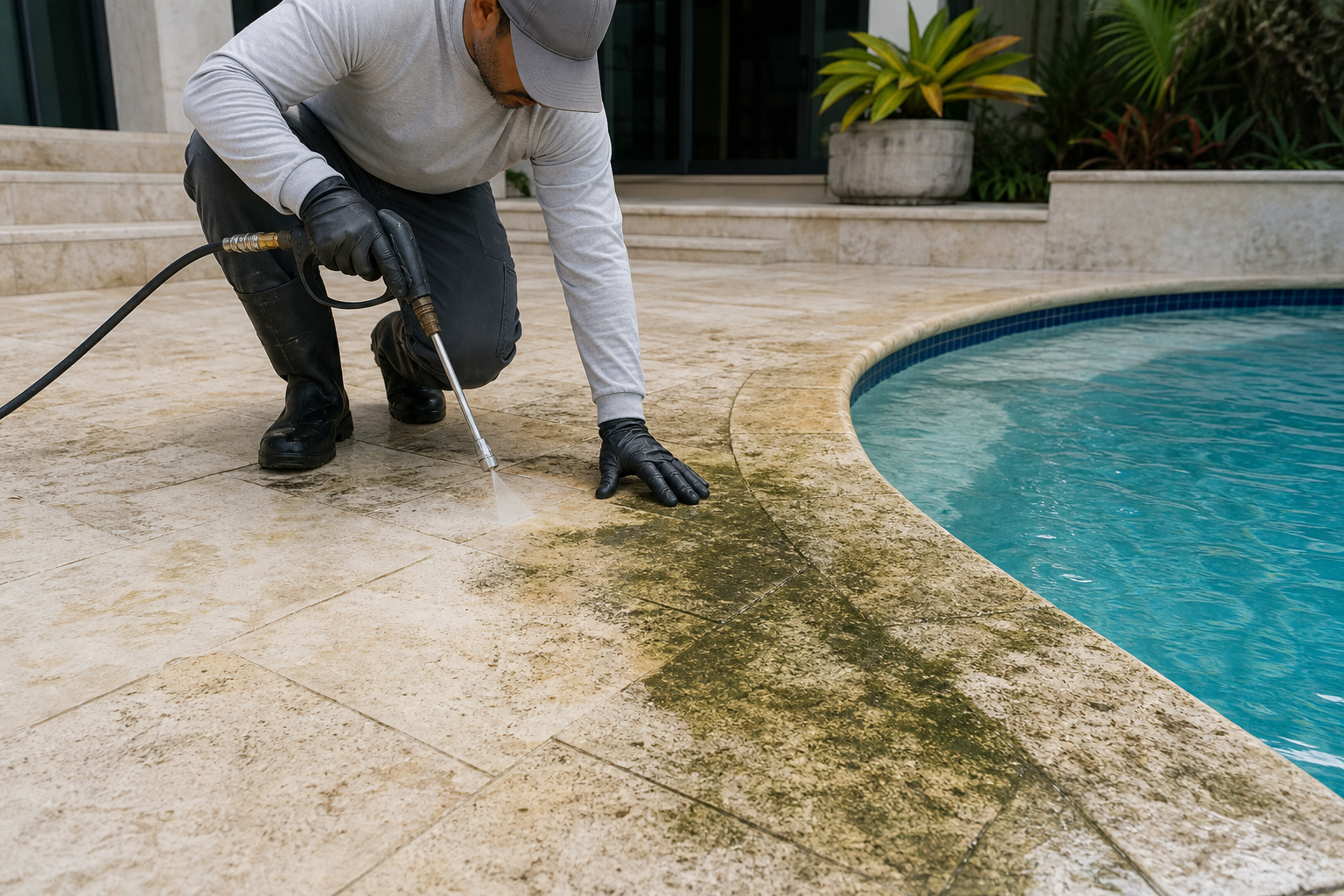
Algae on natural stone is more than a color problem. It can make walkways slick, trap moisture in the surface, and leave a patio or pool deck looking older than it is. In Miami, the mix of humidity, frequent rain, shade, irrigation overspray, pool splash, and salt air can all encourage biological growth on coral stone and other porous surfaces. That is why the best way to remove algae from natural stone is not simply to wash it hard or bleach it repeatedly. The safer approach starts with understanding the stone itself.
Coral stone is especially porous. Tiny openings in the surface can hold water, dirt, organic residue, and spores. When moisture lingers, algae can establish itself below the top layer, not just on it. A cleaning method that only strips the visible green film may leave residue inside the pores, allowing growth to return quickly. A method that is too aggressive can also scar the face of the stone, open the pores further, or loosen soft material from the surface.
Why algae keeps coming back on coral stone
Porosity is the main reason coral stone needs a measured cleaning plan. Because the stone can absorb and hold moisture, it often stays damp longer than denser materials. In Miami, that effect becomes more noticeable in shaded areas, around planters, near drains that do not empty fully, and in places that get repeated irrigation mist or pool splash. Even UV exposure matters. Sunny areas may dry faster, while nearby shaded sections remain wet enough for biological growth to keep feeding.
Algae is often part of a larger buildup that can include mildew, dirt, leaf tannins, and fine sediment. If that residue is not removed fully, the surface may still provide food and moisture retention after cleaning. This is one reason the best way to remove algae from natural stone involves more than one step: controlled cleaning, careful rinsing, and attention to the source of moisture.
Start with a test area before full cleaning
A test area matters because natural stone does not respond the same way in every location. Coral stone can vary in density, finish, age, and previous treatment. Some sections may have old sealer residue, weathering, or repairs that react differently than surrounding stone. A small test area allows the cleaner to evaluate how much biological growth is present, how deeply it has settled into the pores, and what level of pressure and dwell time the surface can tolerate.
Testing also helps confirm whether discoloration is actually algae, embedded soil, mineral residue, or a combination. That matters because the wrong cleaning method can leave the stone uneven or partially clean. A proper test area reduces the chance of etching, surface loss, streaking, and patchy results across the larger installation.
The safest cleaning approach for porous natural stone
For most algae-covered stone, the goal is to loosen and remove biological growth without damaging the surface matrix. That usually means a balanced process rather than a single harsh treatment.
- Inspect the stone and surrounding conditions. Look for shade patterns, clogged joints, low spots, drainage issues, irrigation spray, and areas exposed to pool water or salt air. These conditions often explain why certain sections are greener than others.
- Pre-treat the growth appropriately. A suitable stone-safe cleaner may be used to help break down organic buildup. The exact choice depends on the stone condition and the type of residue present.
- Use calibrated cleaning pressure. Pressure must match the stone, not the other way around. Calibrated cleaning pressure means adjusting the output and technique so the cleaner can remove contamination while protecting the face of the stone. On coral stone, excessive force can roughen the surface, enlarge pores, and create a fresh pathway for moisture retention.
- Rinse thoroughly for residue removal. This step is essential. Dead organic matter, loosened dirt, and cleaner residue should be fully removed from the pores and joints as much as the stone allows. If residue remains, the surface may attract new growth faster.
- Allow the stone to dry and reassess. Some staining looks different when wet. Once the area dries, any persistent shadowing can be evaluated separately from active algae.
Why high pressure is not a universal solution
It is tempting to think stronger pressure means better cleaning, but that is often the wrong approach for natural stone. High pressure can carve soft areas, expose aggregate, leave wand marks, and weaken edges and grout or joint materials. On a porous surface like coral stone, damage may not look dramatic at first, yet the texture can become more open and more likely to trap moisture after cleaning. That can make future algae problems worse, not better.
This is why calibrated cleaning pressure is so important. The method should be based on the stone's condition, not on a one-size-fits-all setting.
Why chlorine is not a universal solution
Chlorine is also not a universal answer. While it may lighten visible growth, it is not automatically the right treatment for every natural stone surface or every surrounding environment. Repeated harsh chemical use can create its own maintenance issues, especially if it is used without proper dilution control, dwell management, and complete residue removal. On some installations, it may affect nearby materials, landscaping, or metal fixtures. More importantly, if the underlying moisture problem is left in place, the algae often returns regardless of how strong the cleaner was.
The better approach is to use a cleaning method chosen for the specific stone and contamination, then address the conditions that allow growth to persist.
Moisture control is part of algae removal
If the stone stays wet, cleaning alone may only provide temporary improvement. In Miami, common moisture sources include daily humidity, frequent rain, overspray from sprinklers, poor drainage, dense shade, and pool splash that repeatedly wets the same walking path or coping edge. Salt air can also leave deposits that combine with moisture and grime on exterior surfaces near the coast.
Practical moisture-related fixes may include:
- Adjusting irrigation so it does not hit stone surfaces directly
- Improving drainage where water collects after rain
- Keeping joints and edges clear so water can move away
- Trimming back heavy plant growth that blocks airflow and light
- Managing repeated splash zones around pools and water features
These changes do not replace cleaning, but they support longer-lasting results by making the environment less favorable for biological growth.
Residue removal matters as much as surface cleaning
One of the most overlooked parts of stone care is residue removal. When algae is killed or loosened, fragments of organic matter can remain in pores, pits, and textured areas. Cleaner residue can remain too if rinsing is incomplete. On coral stone, those leftovers can hold moisture and become a starting point for renewed discoloration.
Thorough rinsing and extraction help separate a cosmetic wash from actual cleaning. This is especially relevant on textured decks, lanais, entries, and pool surrounds where pits and voids naturally trap fine material. If the surface looks cleaner but still feels grimy or dries unevenly, residue may still be present below the top layer.
After cleaning, sealing may help but it is not a shortcut
For some natural stone surfaces, sealing can be part of a maintenance plan after the stone is properly cleaned and dried. Sealer is not a substitute for removing algae, and it should not be applied over active growth or trapped moisture. On coral stone, the right timing and product choice matter because the stone needs to breathe while also gaining practical resistance to water intrusion and staining.
A good maintenance plan looks at the full cycle: clean correctly, let the stone dry, confirm that residue has been removed, then consider whether sealing fits the specific installation and exposure conditions.
What homeowners should avoid
- Aggressive pressure washing without testing. This can permanently change the texture and appearance of soft stone.
- Repeated bleach-only cleaning. It may brighten growth temporarily without addressing embedded residue or moisture sources.
- Skipping the test area. Small differences in stone condition can produce uneven results across a larger surface.
- Sealing damp or dirty stone. That can trap problems instead of solving them.
- Ignoring shade, drainage, and irrigation. If the stone stays wet, the growth cycle usually continues.
Best way to remove algae from natural stone: the practical takeaway
The best way to remove algae from natural stone is to treat it as a stone-care issue, not just a stain. On coral stone, porosity changes everything. Moisture gets in, biological growth settles into the surface, and harsh methods can do more harm than good. A careful test area, stone-appropriate cleaning agents, calibrated cleaning pressure, and complete residue removal are the core of a safer process. In Miami, results also depend on reducing the conditions that keep the surface wet, from irrigation overspray to poor drainage and long periods of shade.
When the method respects the stone, cleaning does more than improve appearance. It helps preserve surface texture, reduce slipperiness, and support a more manageable maintenance routine over time.
FAQs
Can algae on coral stone be removed without damaging the surface?
Yes, if the cleaning method is matched to the stone. Coral stone is porous and often softer than people expect, so a test area and calibrated pressure are important to avoid surface damage.
How often does natural stone need algae cleaning in Miami?
It depends on moisture exposure. Shaded areas, spots with irrigation overspray, and poolside sections that stay wet usually need attention more often than open areas that dry quickly.
Will pressure washing alone solve algae problems on natural stone?
Not always. Pressure washing alone may remove visible growth but leave embedded residue or moisture-related causes in place. If pressure is too high, it can also damage the stone.
Should stone be sealed after algae removal?
Sometimes, but only after the stone is properly cleaned and fully dry. Sealing can support maintenance on some surfaces, but it is not a replacement for safe cleaning or moisture control.
Related stone care services
Get a condition-based recommendation
Send photos and a short description of the surface. We serve Miami and surrounding communities.
Request a Free Quote