Stone Care Guides · 2026-07-22
Safe Pressure Washing Coral Stone in Miami: A Practical Homeowner Guide
A practical guide to cleaning coral stone in Miami with a focus on safe pressure washing, moisture control, residue removal, and long-term care.
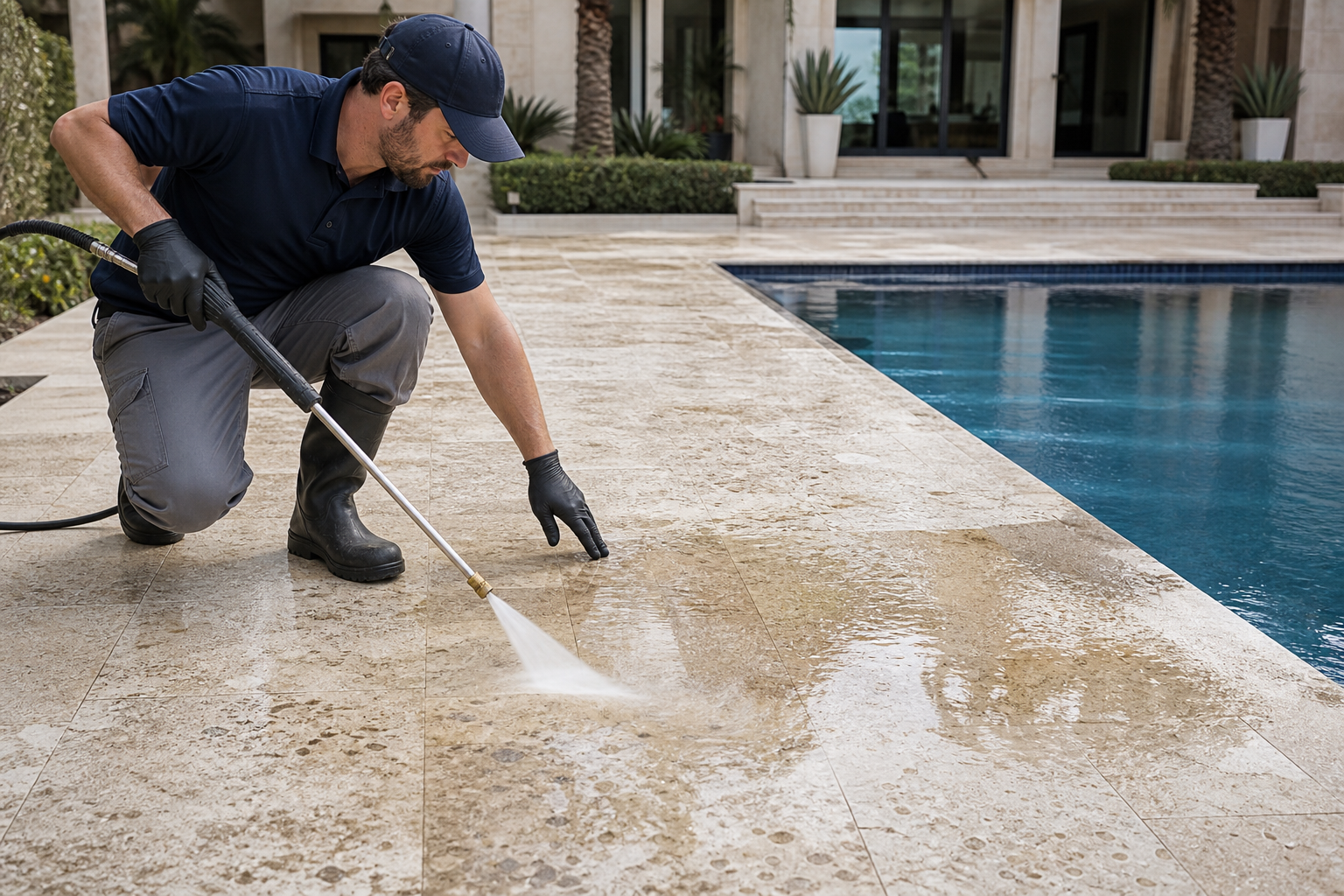
Coral stone is popular across Miami for pool decks, patios, walkways, coping, and outdoor living areas because it stays comfortable underfoot and has a natural, coastal look. It also needs a careful cleaning approach. If you are researching pressure washing coral stone safely, the key point is simple: coral stone is porous, and that porosity changes how water, soil, algae, and cleaning residues behave on the surface.
A good cleaning plan is not just about making the stone look brighter for a day. It is about removing grime and biological growth without driving moisture deeper into the material, opening the surface, or leaving behind residues that attract more dirt. In Miami, that matters even more because humidity, rain, shade, salt air, irrigation overspray, and pool splash can all keep stone damp longer than expected.
Why coral stone needs a gentler cleaning method
Coral stone has a naturally open structure. Tiny pores and voids can absorb water, collect fine debris, and hold organic material. That is why dark spotting, green film, mildew, and general dinginess often return faster on neglected stone than on denser materials.
Porosity also means the stone can be damaged by an overly aggressive wash. High pressure may not always cause obvious breakage right away, but it can roughen the face, widen small pits, dislodge fragile surface grains, and force water into the stone and into joints. Once that happens, the surface may become harder to maintain because dirt and moisture can cling more easily.
For that reason, calibrated cleaning pressure matters. The right setting depends on the stone condition, the type of soil, nearby grout or joints, previous sealers, and whether the surface already has weak or sandy areas. A safe process uses only as much pressure as needed, not the most pressure available.
What usually soils coral stone in Miami
Not all discoloration on coral stone is the same, and the source affects the cleaning method.
- Biological growth: algae, mildew, and organic film often develop in shaded or damp areas.
- Moisture-related darkening: poor drainage, irrigation spray, and heavy rain can keep sections wet and visibly darker.
- Pool splash and salt exposure: mineral residue and salt air can leave deposits or contribute to surface buildup.
- Ground-in soil: foot traffic can push dirt into pores and low spots.
- Leaf tannins and organic staining: planters, trees, and trapped debris can leave brown or uneven marks.
These issues may appear together. A green film in a shaded corner can sit on top of embedded dirt, while a bright white residue near a pool edge may be mixed with body oils or sunscreen buildup. That is one reason a one-size-fits-all cleaning method is risky.
What safe pressure washing looks like on coral stone
Safe cleaning starts with evaluation, not spraying. The stone should be checked for soft areas, failing joints, previous patching, drainage patterns, and signs of trapped moisture. Areas near planters, downspouts, sprinklers, and pool edges often need extra care because the stone may already be saturated or chemically exposed.
When pressure washing coral stone safely, the pressure should be calibrated to the surface instead of set at a generic level. The goal is controlled cleaning of the soiling on the face of the stone, not blasting into the pores. Technique matters just as much as machine settings. Keeping the wand distance consistent, using the correct spray pattern, and avoiding prolonged focus on one spot all help reduce etching or surface erosion.
Low-to-moderate pressure is often paired with appropriate stone-safe cleaners and agitation so the washing step can do less of the work. This is important because relying on force alone is often what creates damage. High pressure is not a universal solution for coral stone, even if the surface looks heavily soiled.
Why a test area matters before full cleaning
A test area is one of the most important parts of coral stone cleaning. It shows how the stone reacts before the entire surface is treated. Because coral stone varies in density, weathering, color, and prior treatment, two sections of the same patio can respond differently.
A proper test area helps answer practical questions:
- Will the chosen pressure clean effectively without roughening the surface?
- Does the cleaner lift biological growth or only bleach the visible color?
- Will embedded soil remain after rinsing and need a different approach?
- Is there any old sealer or residue interfering with uniform results?
- Does the cleaned section dry evenly, or does lingering moisture reveal a drainage issue?
Testing also helps set realistic expectations. Some deep staining, age-related variation, or prior damage may not disappear through standard cleaning alone. It is better to identify that early than to overwork the stone chasing a perfect but unrealistic result.
Biological growth should be removed, not just lightened
On coral stone, green or black growth is common in places that stay damp from shade, irrigation, or poor airflow. The problem with aggressive washing alone is that it may remove the top layer you can see without fully addressing what is settled into pores and textured areas.
That is why biological growth should be treated as a cleaning and residue-removal issue, not just a color issue. If organic material is left behind, the surface may look better briefly and then discolor again quickly. The goal is to break down and rinse away contamination as completely as possible while keeping the cleaning process compatible with porous stone.
Chlorine should not be treated as an automatic answer for every coral stone surface. Some situations may require special chemistry choices and careful handling, but chlorine is not a universal recommendation for porous stone, surrounding landscaping, joints, metal fixtures, or adjacent finishes. The safest method depends on the exact condition of the area being cleaned.
Moisture control is part of cleaning, not a separate issue
One reason coral stone can remain problematic even after cleaning is that moisture sources are still active. In Miami, repeated rain, high humidity, overspray from sprinklers, and shaded exposures can slow drying times. Pool decks may also see constant splash-out, while walkways near lawns can stay damp from irrigation and runoff.
If the stone does not dry properly, biological growth can return faster and stains may reappear. During and after cleaning, moisture should be managed thoughtfully:
- Watch for drainage patterns that leave puddling or damp edges.
- Reduce irrigation overspray onto stone surfaces where possible.
- Remove trapped soil and debris from joints and low spots.
- Make sure rinsing water is not allowed to sit on the surface unnecessarily.
- Note where shade keeps stone darker for longer periods.
Cleaning can improve appearance, but moisture management helps preserve that improvement.
Residue removal is essential for a natural finish
Coral stone often looks best when it is clean without appearing coated, sticky, or artificially bright. That is why residue removal matters. Cleaner left in pores, loosened organic matter, and suspended dirt need to be rinsed away thoroughly. Otherwise the stone can dry unevenly, attract new grime, or show blotchy areas.
Residue can also come from earlier maintenance attempts. Soap films, incompatible topical products, and hard-water deposits may remain on the surface and confuse the cleaning results. A methodical process separates what can be rinsed off, what needs more dwell time, and what may require restoration steps beyond routine washing.
The point is not just to make coral stone wet and lighter in color for the afternoon. The point is to leave the surface genuinely cleaner and more stable for ongoing maintenance.
When cleaning may need more than washing alone
Some coral stone surfaces need a broader care plan. If the stone is powdery, unevenly worn, heavily stained, or affected by old coatings, washing may only be one step. Restoration may involve deeper cleaning, sealer assessment, spot treatment, or addressing drainage and maintenance habits that keep creating the same problem.
In outdoor Miami settings, UV, salt air, rain cycles, and frequent use can all influence how the stone ages. A surface exposed to full sun may weather differently from one under trees or beside a screen enclosure. A walkway near planters may accumulate organics differently than pool coping exposed to splash and sun lotion. These details affect how the stone should be cleaned and maintained over time.
Practical habits that help coral stone stay cleaner longer
- Rinse off debris early: leaves, mulch, and dirt hold moisture and can stain if left in place.
- Monitor sprinkler patterns: regular overspray can keep the same areas constantly damp.
- Address drainage issues: standing water encourages bio-growth and uneven darkening.
- Use gentle maintenance methods: avoid assuming more pressure always means better results.
- Inspect problem areas seasonally: shaded corners, pool edges, and low spots often need the earliest attention.
These steps do not replace professional stone care when the surface is heavily soiled or sensitive, but they do support better long-term results.
FAQs
Can coral stone be pressure washed at all?
Yes, but it should be done carefully. Pressure washing coral stone safely means using calibrated pressure, proper technique, and often stone-appropriate cleaners so force is not doing all the work.
Why does coral stone get dark or green so quickly in some areas?
Usually because of moisture and biological growth. Shade, humidity, rain, irrigation overspray, poor drainage, and pool splash can all keep the stone damp long enough for algae or mildew to develop.
Is stronger pressure the best way to remove stains from coral stone?
No. High pressure is not a universal solution. It can damage porous stone, roughen the surface, and force water deeper into the material. Stain removal depends on the type of staining and the condition of the stone.
Why is a test area important before cleaning the whole surface?
A test area shows how the coral stone responds to pressure, cleaning agents, and rinsing. It helps avoid surface damage, reveals hidden residue issues, and confirms whether the planned method will produce even results.
Related stone care services
Get a condition-based recommendation
Send photos and a short description of the surface. We serve Miami and surrounding communities.
Request a Free Quote