Stone Care Guides · 2026-07-19
How Saltwater Pools Affect Coral Stone Pool Decks in Miami
A practical guide to how saltwater, splash-out, drainage, sunscreen oils, UV, and irrigation affect coral stone pool decks in Miami, and how ongoing stone care can help.
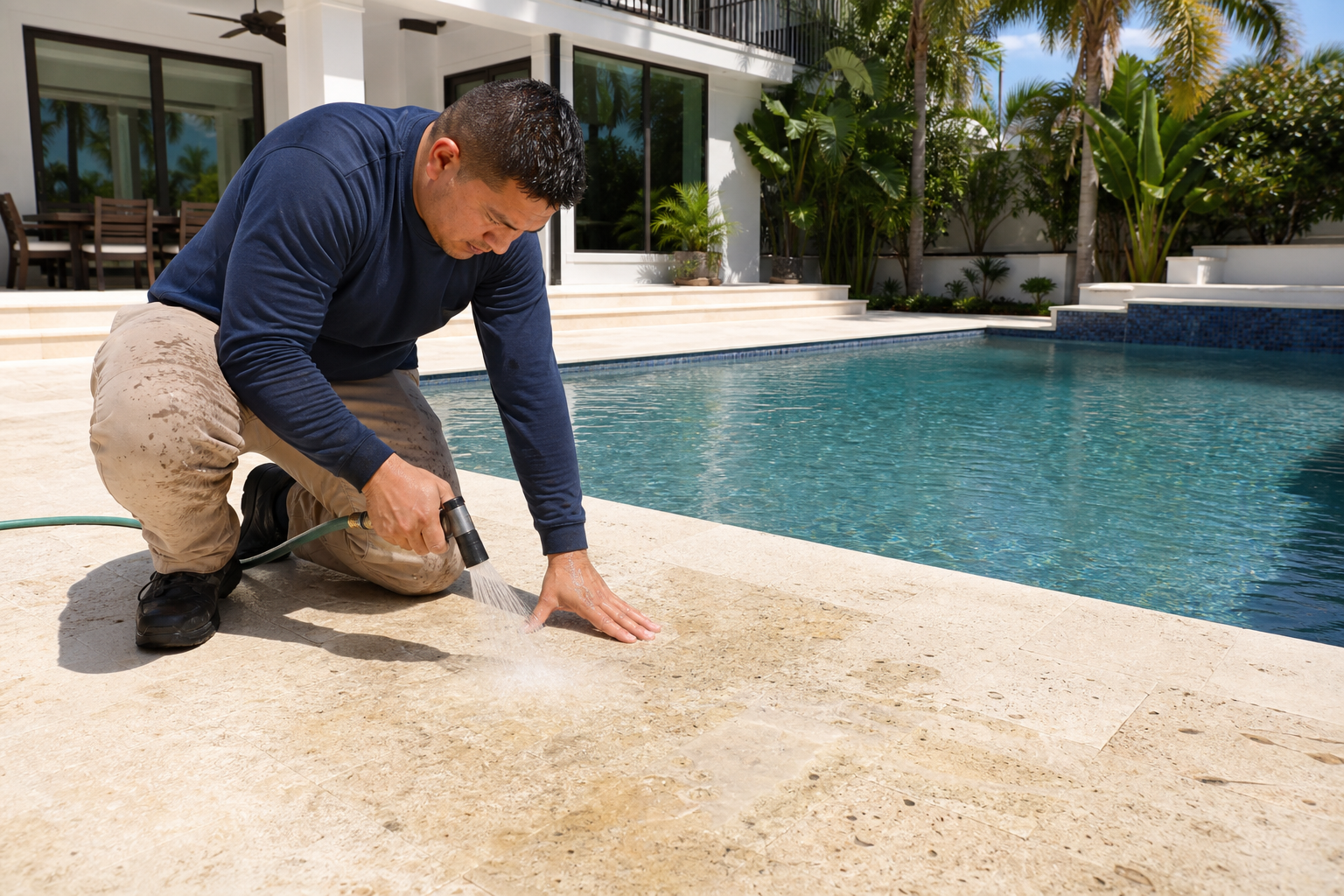
Coral stone is a popular choice around Miami pools because it stays visually soft and natural while fitting the coastal look many homes already have. Around a pool, though, this stone deals with constant exposure to water, sun, foot traffic, and residue. If you are trying to understand saltwater pool effects on coral stone, it helps to look beyond the pool system itself and focus on what the deck experiences day after day.
Coral stone is porous. That means it can absorb water, collect residues near the surface, and show wear faster when moisture and contaminants are allowed to sit. On pool decks in Miami, the main stressors are usually wet-dry cycling, drainage problems, salt or chlorinated splash-out, sunscreen oils, UV exposure, movement in joints, and irrigation overspray. None of these issues act alone for long. They usually overlap.
Why pool decks around saltwater systems need extra attention
When people talk about saltwater pools, they often focus on the water feeling different from traditionally chlorinated pools. But for stone care, the more important issue is repeated contact with mineral-bearing water and the residue left behind as water evaporates. Splash-out, bare wet feet, toys, towels, and deck runoff can all move that water across the stone surface.
As moisture dries, residues can remain in or on the stone. On coral stone, that can contribute to a dull appearance, uneven color, roughness in some areas, and buildup near the pool edge or low spots. In Miami, strong sun can speed evaporation, while humidity and frequent rain can keep surfaces damp longer than expected. That combination can make the cycle more noticeable over time.
Wet-dry cycling is one of the biggest long-term stressors
Wet-dry cycling is exactly what it sounds like: the stone gets wet, then dries, then gets wet again. Around a pool deck, this happens constantly. Pool splash, rain, morning moisture, and irrigation can all wet the surface. Later, sun and airflow begin drying it. Coral stone handles normal outdoor exposure, but repeated cycling can make small maintenance issues become larger ones if the deck is not cared for consistently.
When water enters the pore structure and evaporates again and again, residues can be left behind in the near-surface area. That can change the look and feel of the stone over time. It may also make some areas weather differently than others, especially where shade keeps the surface damp longer or where direct afternoon UV causes faster drying. The result is often an uneven deck rather than a uniformly aged one.
Where wet-dry cycling shows up first
- Along the pool perimeter, where splash-out is most frequent
- At step-offs and entries, where wet foot traffic is repeated
- In low spots, where water lingers instead of draining away
- Near planters and irrigation zones, where extra moisture reaches the deck
- Under furniture edges and in shaded sections, where drying is slower
Drainage matters as much as the pool water itself
Many stone problems blamed on saltwater are partly drainage problems. If the deck does not move water away efficiently, splash-out and rainwater can stay on the surface longer than they should. Puddling increases contact time. It also means residues concentrate where water repeatedly collects and evaporates.
In Miami, heavy rain can quickly expose drainage weaknesses. A deck may look fine during dry weather, then show darkened patches, recurring buildup, or slick areas once rainy periods begin. Stone care often includes paying attention to the way water travels across the deck, not just the condition of the stone face.
Proper drainage helps reduce:
- Standing water near the coping and deck joints
- Uneven surface discoloration
- Premature buildup in low areas
- Reduced traction from residues left on the walking surface
- Moisture exposure near adjoining walls, beds, and transitions
Salt or chlorinated water can both leave a mark
Whether a pool is saltwater or traditionally chlorinated, the deck is still exposed to treated water. The difference is often in the type and frequency of residue left behind. Coral stone does not need dramatic damage to start looking tired. Sometimes the first signs are subtle: a haze, a slightly chalky appearance, or a texture that feels different under bare feet.
Saltwater pool effects on coral stone are often most visible where splash-out is constant and where rinsing by rain is incomplete. In covered areas or places with weak drainage, residues may remain longer. Traditional chlorinated pools can create similar deck-care concerns because treatment chemicals and pH imbalances can also affect what is deposited on the stone surface.
The practical takeaway is simple: pool chemistry may vary, but repeated exposure to treated water is always a maintenance factor for porous stone.
Sunscreen oils and body products can change the surface feel
Pool decks do not only collect water. They also collect what bathers bring with them. Sunscreen, tanning products, lotions, and body oils can transfer onto coral stone, especially in lounging areas, shallow-end entries, and the path between seating and the pool. These residues can trap dirt, deepen surface darkening in patches, and interfere with the clean, dry feel people expect from a pool deck.
On a textured stone like coral stone, oily residue can also affect surface traction. A deck does not have to look obviously dirty to feel less secure underfoot. That is one reason routine cleaning matters around active pools. It is not only about appearance. It is also about keeping the walking surface more consistent.
UV exposure and shade create different wear patterns
Miami sun is strong, and UV exposure affects the entire deck, including any sealer that may already be on the stone. Areas in full sun can dry faster and weather differently than sections under trees, screen structures, roof overhangs, or long shadows. Shade may sound protective, but it often means slower drying, more moisture retention, and a greater chance for surface film or organic discoloration to linger.
This contrast is common on exterior stone. One part of the pool deck may be sun-bleached and dry quickly, while another stays damp and gathers residue. If maintenance is delayed, the deck can begin to look patchy even when the stone type is the same throughout.
Joints deserve close attention
The stone pieces are only part of the system. Joints between pavers or slabs also influence how well the deck performs. If joints open, erode, or hold water, the surrounding stone becomes more vulnerable to movement, edge wear, and recurring moisture problems. Debris buildup in joints can also slow drainage and create places where dampness stays longer after rain or splash-out.
Joint issues are easy to overlook because attention usually goes to the stone face. But on a pool deck, a sound surface depends on both. Cleaning and maintenance should account for the field of the deck as well as the spaces between pieces.
Irrigation overspray can quietly add to the problem
One of the most common hidden contributors to exterior stone wear is irrigation overspray. Sprinklers that regularly hit the pool deck add moisture even when the pool is not in use. They can also deposit minerals from the water source onto the stone. If overspray happens in the same spots every day, those areas may remain darker, develop buildup faster, or feel different from the rest of the deck.
In Miami landscapes with dense planting, shade and irrigation often work together to keep portions of the deck damp. That can intensify the same wet-dry and residue cycle already caused by the pool and weather.
What practical maintenance focuses on
Coral stone around a pool usually benefits from a maintenance plan centered on condition, not guesswork. The goal is to remove residue safely, support surface traction, limit moisture-related problems, and help the stone age more evenly.
- Cleaning to remove salt residue, chlorinated splash deposits, oils, dirt, and surface film
- Inspection of drainage patterns, low spots, and recurring damp areas
- Attention to joints where water or debris may be collecting
- Review of irrigation overspray and how landscaping moisture reaches the deck
- Sealing when appropriate for existing stone conditions and poolside exposure
- Ongoing maintenance so buildup does not become a larger restoration issue
Not every deck needs the same approach at the same time. Some mainly need cleaning and better moisture control. Others need deeper restoration because residues, wear, and uneven absorption have already changed the look and feel of the surface.
How Miami conditions influence coral stone care
Miami does not change the basic principles of stone care, but it does increase how often those principles matter. Humidity can slow drying. Rain can repeatedly recharge moisture in the deck. UV exposure can accelerate weathering on exposed sections. Salt air may add another layer of coastal residue, especially in open settings. Shade can keep areas damp. Pool splash and irrigation can do the same even during dry weather.
That is why local exterior stone maintenance tends to focus on patterns of exposure rather than one-time fixes. A pool deck may look clean after a wash, but if drainage, overspray, and residue sources are unchanged, the same areas often return to the same condition.
FAQs
Does a saltwater pool ruin coral stone?
Not automatically, but repeated splash-out and evaporation can leave residue on porous stone. The bigger issue is usually ongoing exposure combined with drainage, moisture retention, and delayed cleaning.
Why does my coral stone deck feel slippery in some spots?
Traction can be reduced by sunscreen oils, body products, surface film, residue from treated water, or areas that stay damp longer. Low spots, shade, and irrigation overspray often make those sections more noticeable.
Is rain helpful for rinsing a pool deck?
Rain can rinse loose residue, but it can also add more moisture and highlight drainage problems. If water lingers or repeatedly collects in the same places, rain may contribute to uneven wear rather than solve it.
Do joints matter if the stone surface still looks fine?
Yes. Joints affect drainage, stability, and how long moisture stays in the deck system. Problems in the joints can lead to recurring issues even when the stone face appears acceptable at first.
Related stone care services
Get a condition-based recommendation
Send photos and a short description of the surface. We serve Miami and surrounding communities.
Request a Free Quote